
How Small Brands Can Compete with Big Brands Using Digital Marketing
Introduction
In today’s digital world, small brands have more opportunities than ever before. While big brands have large budgets and strong market presence, small businesses can compete by being more flexible, creative, and customer-focused. Digital marketing has made it possible for even small brands to reach a wide audience and build meaningful connections. Success today is not about how big your brand is, but how effectively you communicate and connect with your audience.
1.Focusing on a Niche Audience
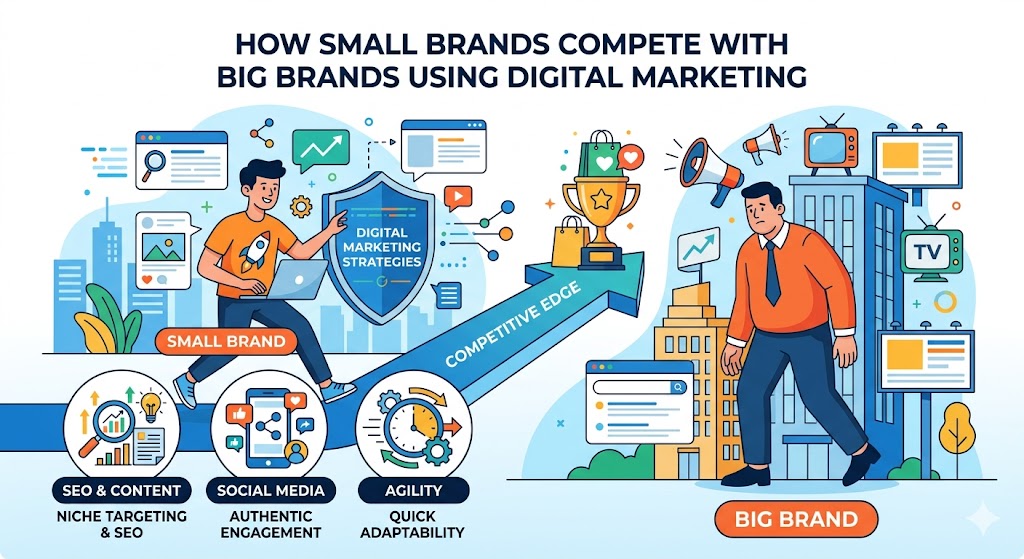
One of the biggest advantages small brands can have is clarity in their target audience. Instead of trying to reach everyone, focusing on a specific group allows brands to create more relevant and personalized content. When a brand understands its audience deeply, it becomes easier to address their needs, solve their problems, and build a stronger connection. This focused approach not only reduces competition but also improves the effectiveness of marketing efforts.
2.Using Social Media Strategically
Social media is one of the most powerful tools for small brands, but success depends on how it is used. Instead of being active on every platform, it is better to choose one or two platforms where the target audience is most active. Consistency plays a key role in building visibility and trust. Creating engaging content such as short videos, informative posts, and behind-the-scenes content helps brands stay connected with their audience and build long-term relationships.
3.Building a Personal Brand
Small brands can stand out by showing the human side behind the business. People are more likely to trust and connect with individuals rather than faceless companies. By sharing personal experiences, challenges, and the journey behind the brand, businesses can create a sense of authenticity. This emotional connection builds trust and makes customers feel more connected to the brand, which is something big companies often struggle to achieve.
4.Creating Value-Driven Content
Content that provides value is the foundation of successful digital marketing. Instead of focusing only on promoting products or services, small brands should aim to educate, inform, or solve problems for their audience. When people find content helpful, they are more likely to trust the brand and engage with it regularly. Over time, this trust leads to stronger relationships and better conversion.
5.Collaborating with Micro-Influencers
Working with micro-influencers is an effective strategy for small brands to increase their reach. These influencers may have smaller audiences, but they often have higher engagement and stronger relationships with their followers. Their recommendations feel more genuine and trustworthy. By collaborating with the right influencers, small brands can reach a targeted audience without spending a large budget.
6.Staying Flexible and Adapting Quickly
Flexibility is one of the biggest strengths of small brands. Unlike large companies that require multiple approvals, small businesses can quickly adapt to trends and experiment with new ideas. This ability to move fast allows them to stay relevant in a constantly changing digital environment. Trying new strategies, learning from results, and improving continuously can lead to long-term growth.
Conclusion
Small brands do not need massive budgets to compete with big brands. By focusing on a specific audience, using social media wisely, building a personal connection, and creating valuable content, they can build a strong presence in the digital space. The key to success lies in authenticity, consistency, and the ability to adapt. In the end, brands that connect genuinely with their audience are the ones that stand out and grow.